Rodents can spread viruses and bacteria through their urine, feces, and saliva. In environments such as warehouses, agricultural facilities, cruise ships, marine vessels, and other enclosed spaces, disturbing old droppings, nests, or contaminated dust during cleanup can release tiny airborne particles that may be inhaled deep into the lungs.
Key risks during rodent cleanup:
- Hantaviruses in enclosed, undisturbed spaces (sheds, cabins, barns, crawlspaces, attics).
- Seoul virus in settings with pet rats or infestations in homes and buildings.
- Mold and other contaminants that often come along with rodent damage, especially after water leaks or flooding.
A well‑chosen respirator blocks infected dust and droplets before they reach your airways. You still need gloves, eye protection, and good disinfection practices, but respiratory protection is a core piece of your personal protective equipment.

When You Need a Respirator
You should wear a respirator anytime you are cleaning or working in areas with rodent contamination where dust or aerosols can be generated.
Typical scenarios:
- Cleaning old droppings and nests in attics, crawlspaces, sheds, cabins, barns, or garages.
- Heavy or long‑standing infestations where droppings are widespread or layered.
- Removing contaminated insulation, drywall, or ceiling tiles.
- Working in enclosed or poorly ventilated spaces where dust hangs in the air.
- Using vacuums (even HEPA) or power tools around rodent‑contaminated material.
For a practical “how‑to” homeowner view, see this rodent droppings cleanup guide from a pest control provider: How to clean up rodent droppings to avoid hantavirus?
Understanding Respirator Ratings (N95, P100, etc.)
NIOSH‑approved particulate respirators are labeled with a letter and a number; the number is the minimum filtration efficiency against fine airborne particles.
- N95: Filters at least 95% of airborne particles (not oil‑resistant).
- P100: Filters at least 99.97% of airborne particles, and is oil‑proof.
Respirator Types and Dentec Options
1. Disposable N95 / P100 Respirators
Disposable respirators are molded or fold‑flat masks designed for limited use.
They work well for:
- Light to moderate rodent cleanup in homes, garages, and small storage spaces.
- Short tasks where convenience and low upfront cost are priorities.
However, disposable use adds cost and waste if you do frequent cleanup or remediation work.
Disposable N95 Respirators


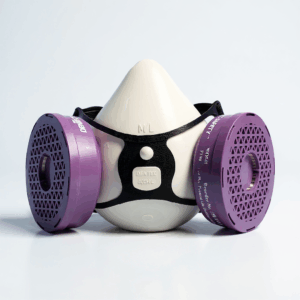
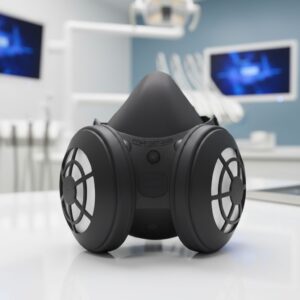
2. Reusable Half‑Face Respirators (Dentec Comfort‑Air®)
Reusable half‑face respirators with P100 or N95 filters area all manufactured and made in Amaerica and offer higher protection, better comfort, and lower long‑term cost.
Dentec’s Comfort‑Air® line is designed to replace disposables with reusable N95 or P100 solutions:
- Explore all Dentec Respiratory Protection
- Dentec Comfort‑Air® and Comfort-Air® Nx series with NIOSH‑approved N95 or P100 filters, available in molded elastomeric and silicone designs for a better seal and comfort.
Best uses:
- Moderate to heavy rodent contamination in attics, barns, sheds, and commercial spaces.
- Regular work by pest control, remediation, or maintenance teams.
Benefits:
- High‑efficiency N95 or P100 filters mount on the same reusable mask body, so you can match the filter rating to the risk.
- Filters combine electrostatic and mechanical layers for better real‑world life and less clogging in dusty environments.
Reusable N95/P100 Respirators
-

Comfort-Air®NxMD WHITE Elastomeric Rubber Half Mask W/O An Exhalation Valve – P100 Cartridges
$63.00 -
Comfort-Air®NxMD White Elastomeric Rubber Half Mask W/O An Exhalation Valve – N95 Filters
$51.50 -
Comfort-Air®Nx BLACK Elastomeric Rubber Half Mask W/O An Exhalation Valve – P100 Cartridges
$57.60 -
Comfort-Air®Nx BLACK Elastomeric Rubber Half Mask W/O An Exhalation Valve- N95 Filters
$44.00 -
COMFORT-AIR® COMPLETE WITH N95 FILTERS – MEDIUM/LARGE
$29.00 -

COMFORT-AIR® SERIES 100 SILICONE COMPLETE WITH P100 CARTRIDGES – LARGE IN DISPLAY BAG
-
COMFORT-AIR® SERIES 100 SILICONE COMPLETE WITH N95 FILTERS – MEDIUM
$50.00 -

COMFORT-AIR® SERIES 400 ELASTOMERIC COMPLETE WITH P100 CARTRIDGES – MEDIUM/LARGE IN DISPLAY BAG
$40.00




3. Full‑Face Respirators
Full‑face respirators cover eyes, nose, and mouth and typically use P100 or combination filters.
They’re useful when:
- You have heavy rodent infestation plus splash risk from disinfectants or contaminated liquids.
- You want both respiratory and eye protection in one piece of PPE.
Series 130M – Complete Assemblies
Our full-face respirators with complete filter assemblies provide an all-in-one solution for optimal respiratory protection.


Fit, Seal, and Facial Hair
Even the best respirator only works if it seals properly to your face.
Key points:
- Be clean‑shaven where the mask contacts your face. Beards, stubble, and some facial piercings break the seal and reduce protection.
- Choose the right size and style for your face, and follow the manufacturer’s instructions for donning and adjustment.
- Perform a user seal check each time you put it on (cover filters or exhalation valve as directed and gently breathe in or out to feel for leaks).
- For occupational use, a formal fit test is required to confirm the respirator model and size that seals correctly for each worker.
For workers who cannot shave, a loose‑fitting PAPR hood is the safer choice because it does not depend on a tight face seal.
All Dentec Comfort‑Air® respirators are NIOSH‑approved when used with the correct filters, and they must be fit‑tested and used according to Dentec and regulatory guidelines.
Safe Work Practices Around Rodent Contamination
A respirator is one part of the control strategy. You also need to reduce how much contaminated dust gets into the air.
Public health and occupational safety guidance recommends:
- Ventilate first: Open doors and windows for at least 30 minutes before starting cleanup, and leave the area during this airing‑out period when possible.
- Avoid dry sweeping or regular vacuuming of droppings and nesting materials. These actions launch virus‑containing dust into the air. Cleaning a shed, attic, cabin or barn? Protect against hantavirus | Interior Health
- Pre‑wet contaminated areas with disinfectant (such as a properly diluted bleach solution) and let it soak before you pick up material. How to Clean Up After Rodents | Healthy Pets, Healthy People | CDC
- Wear gloves, eye/face protection, long sleeves, and boots along with your respirator.
- Double‑bag contaminated materials and dispose of them in line with local regulations, especially if they are classified as infectious waste. Hantavirus update.Nov.2010.docx
After the disinfectant has had enough contact time and surfaces are thoroughly wet, the risk from airborne particles is much lower, and in some guidance, respiratory protection is no longer required after this stage of cleanup. (Recommendation for prevention of Seoul virus – Canada.ca)
Maintenance, Filter Changes, and Disposal
How you handle respirators before and after rodent work matters for your safety.
For disposable N95/N100/P100:
- Use them for one job or shift, then discard.
- Replace immediately if they get wet, visibly dirty, damaged, or harder to breathe through.
- Remove by the straps without touching the front, and place directly into a trash bag.
For reusable half‑face and full‑face respirators:
- Change filters according to manufacturer instructions, when breathing resistance increases, or when they become visibly soiled.
- Clean the facepiece after use with mild detergent or a suitable disinfectant, then rinse and air‑dry.
- Store in a clean, dry place away from sunlight and contaminants.
Safe Work Practices and Biohazard Kits
A respirator is part of the solution. You also need safe cleanup methods: ventilate the space, avoid dry sweeping, pre‑wet droppings with disinfectant, and bag waste safely.
- Dentec Biohazard Kit (Plastic): includes disposal bag, gloves, wipes, apron, and instructions – good for containing small contaminated waste.
Link: Dentec #80‑1310‑0 Biohazard Kit - Dentec Biohazard Kit (Softpack) for portable use in vehicles or field work.
Link: Dentec #80‑1310‑1 Biohazard Kit, Softpack

FAQs
Do I really need more than a dust mask for rodent droppings?
Yes. Simple “nuisance dust” masks are not NIOSH‑approved respirators and do not provide the filtration and fit needed for rodent‑borne viruses. Use at least a certified N95 or higher.
Is N95 enough for hantavirus?
Guidance often recommends N95 or higher for many rodent cleanup tasks, but HEPA‑level filtration (N100/P100) is preferred for hantavirus, heavy contamination, or high‑risk work.
Can I wear a respirator with a beard?
Tight‑fitting respirators (disposable, half‑face, full‑face) do not seal safely over facial hair. In these cases, use a loose‑fitting PAPR or shave the seal area.
Do I need eye protection too?
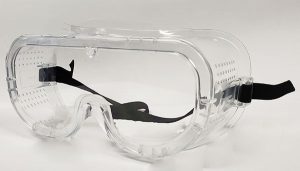
Yes, especially when you risk splashes of disinfectant, rodent urine, or dust. Use safety goggles or a full‑face respirator or a face shield together with your respirator.
Recommended products
-
VALUGARD FACESHIELD WITH SWIVELLING RATCHET SUSPENSION, CSA
-
CAMBRIDGE™ CLEAR POLYCARBONATE LENS AF CSA (SOLD IN BOX OF 12)
$120.00 -

SAFETY-FLEX™ GOGGLE CLEAR AF LENS CSA (SOLD IN 12)
Price range: $55.20 through $60.00


Where can I buy suitable respirators?
Dentec offers reusable N95 and P100 respirator systems specifically designed to replace disposables, with comfort and cost benefits over time.