
On most job sites you now see both traditional hard hats and newer helmets fitted with chin straps. You might be wondering when you actually need that strap and when a standard hard hat is enough. The answer depends on how likely it is that your headwear can be knocked, lifted, or pulled off during work. A hard hat with a chin strap is the better choice for active, windy, elevated, or frequent head‑movement work because it stays in place and reduces the chance of the headgear coming off.
Dentec Safety’s Canadian‑made LIDGUARD® Type 1 and Type 2 hard hats, in both cap style and full brim, are available with or without a 4‑Point Universal Breakaway Chin Strap. That means you can match the same helmet family to both low‑risk ground work and higher‑risk elevated or active tasks.
This guide explains:
- When a hard hat without a chin strap is acceptable
- When you must use a chin strap
- Why a 4‑point universal breakaway chin strap is a good choice for elevated or high‑movement work
- Practical examples and compliance tips for Canada (CSA/Ontario)
Canadian Made CSA Head Protection
-

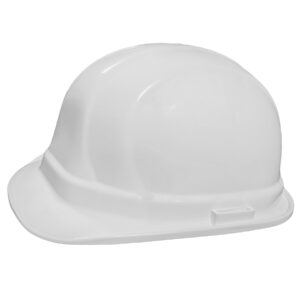
LIDGUARD® Cap Style, 4-pt Ratchet, CSA Type 1
$17.50 -
LIDGUARD® Cap Style, 4-pt Ratchet, CSA Type 2
$32.00 -

LIDGUARD® Cap Style, 4-pt Ratchet, With Chinstrap CSA Type 1
$29.50 -
LIDGUARD® Cap Style, 4-pt Ratchet, With Chinstrap CSA Type 2
$43.90 -

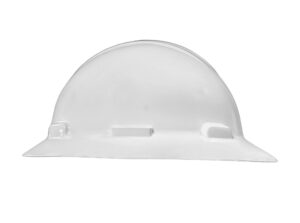
LIDGUARD® Fullbrim Style CSA Type 2
$39.90 -
LIDGUARD® Fullbrim Style With Chinstrap CSA Type 2
$51.90 -
LIDGUARD®Fullbrim Style CSA Type 1
$23.30 -
LIDGUARD®Fullbrim Style With Chinstrap CSA Type 1
$35.30


Why head protection falls off in the first place
Hard hats are designed to absorb impact and protect you from falling or flying objects. But that only works if the shell stays on your head at the moment of impact.
A few common things cause headwear to move or dislodge:
- Bending over or working in awkward positions
- Slips, trips, and falls
- Strong wind or moving vehicles creating air flow
- Snags on rebar, scaffolding, cables, or machinery
- Squeezing through tight access or confined spaces
Traditional hard hats sit loosely on the suspension and usually do not include a chin strap as standard. They can come off in a fall or when you look down quickly, which leaves you exposed to secondary impacts.
Hard hat without chin strap: when it’s enough
For some tasks, a standard hard hat without a chin strap still makes sense. The key is that the risk of dislodgement is low.
Use a hard hat without chin strap when:
- You work at ground level on stable surfaces.
- You are not exposed to strong wind, high movement, or tight spaces.
- You rarely need to lean far forward or work overhead for long periods.
- There is little chance of the helmet catching on equipment or structures.
In these conditions, a properly adjusted suspension can keep the hat in place without extra retention. CSA Z94.1 and ANSI Z89.1 do not force you to add a chin strap in low‑risk conditions; they expect employers to match the headwear and accessories to the hazard assessment.
Examples of “no chin strap” jobs:
- Site supervision from ground level
- Short visits to a construction zone with controlled access
- Indoor industrial work with minimal bending or climbing
When a chin strap is required or strongly recommended
Once the job introduces height, movement, or wind, the balance shifts. Canadian safety guidance and regulations say that if conditions can cause protective headwear to dislodge, you must use a retention system such as a chin strap.
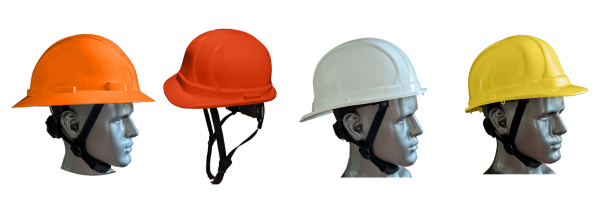
You should use a LIDGUARD® hard hat with the 4‑Point Universal Breakaway Chin Strap when:
- Working at height: scaffolds, towers, roofs, ladders, aerial lifts.
- High movement: climbing, frequent bending, overhead tasks, or dynamic work like rebar tying and formwork.
- Wind or exposed outdoor work: high‑rise construction, open industrial yards.
- Confined spaces / tight access: tanks, pits, mechanical rooms with snag points.
- Around machinery or moving equipment where a bump can shift or eject the helmet.
Ontario’s Construction Projects regulation explicitly requires a retention system when conditions may cause protective headwear to become dislodged, which is exactly the type of scenario LIDGUARD® with a chin strap is built for.
Examples where chin straps are expected:
- Scaffold erection and dismantling
- Structural steel work, rebar and leading‑edge tasks
- Telecommunication or utility pole work
- Windy high‑rise projects in the GTA
- Confined‑space maintenance in tanks or pits
A chin strap helps the helmet stay on during a slip, trip, or fall, and protects against secondary impacts that occur when the head hits again after the first strike.
How Dentec’s 4‑Point Universal Breakaway Chin Strap works
Dentec’s LIDGUARD® Universal Chin Strap is designed to work across most hard hats, including LIDGUARD® Type 1 and Type 2 cap and full brim models.
Key features:
- 4‑Point attachment: Connects at four points on the suspension or shell, improving helmet stability and helping keep the hard hat centered during climbing, bending, and work at height.
- Swiveling Ratchet Suspension System – Features a unique swiveling ratchet design that conforms to the wearer’s head for enhanced comfort, superior stability, and improved retention compared to traditional hard hat suspensions. Helps keep the hard hat securely positioned during movement and demanding work activities.
- Integrated Chin Strap System – When combined with the swiveling ratchet suspension, the chin strap provides an additional level of retention to help keep the hard hat securely in place while working at heights, climbing, bending, or moving through challenging environments. This dual-retention design enhances worker protection and helps reduce the risk of hard hat displacement.
- Quick Connect & Release Buckle with Dual Breakaway Feature: Enables fast, one-handed donning and removal while incorporating breakaway safety features at both the suspension connection and buckle. This design helps improve worker comfort, reduces snagging hazards, and encourages proper use by making the chin strap easy to wear and remove when needed.
- Breakaway function: Releases under tension to help reduce snag‑related injury risks such as strangulation or hanging if the strap is caught on a structure or piece of equipment.
- Dielectric construction: No exposed metal, supporting use in electrical environments where conductivity is a concern.
4‑Point Universal Breakaway Chin Strap – Quick connect and breakaway chin strap provides added stability in active or elevated environments and releases under tension to help reduce snag‑related injury risks.
LIDGUARD® with vs without chin strap: practical comparison
Choosing configuration for common tasks
With LIDGUARD®, each of these setups can be ordered with or without the 4‑Point Universal Breakaway Chin Strap, so you do not have to mix brands or improvise retention solutions on site.
How to decide: with chin strap or without?
You can reduce this decision to a quick hazard check.
Step 1 – Look at dislodgement risk
Ask: “Can this hard hat get knocked, blown, or pulled off?”
Consider:
- Working height and fall risk
- Wind exposure
- Need to bend, crawl, or climb
- Tight spaces or heavy vegetation
- Surrounding machinery or moving parts
If the honest answer is yes, a chin strap is required under good practice and many regulations.
Step 2 – Check your standards and regulations
- CSA Z94.1 is the core standard for industrial head protection in Canada and is referenced in Ontario regulations.
- Ontario’s Construction Projects regulation states that if conditions may cause protective headwear to dislodge, a chin strap or other retention system must be used.
- Safety regulators and loss‑control specialists across Canada emphasize using chin straps whenever headwear can be dislodged in normal work activities.
Step 3 – Match the hardware
- For low‑risk, ground‑level tasks: standard Type 1 hard hat with properly adjusted 4‑point or 6‑point suspension can be acceptable without a chin strap.
- For elevated, high‑movement, or high‑wind tasks: choose a hard hat or safety helmet that accepts a 4‑point universal breakaway chin strap and make the strap part of your standard PPE setup.
FAQs: LIDGUARD® hard hats and chin straps
1. Are all LIDGUARD® hard hats made in Canada?
Yes. The LIDGUARD® head protection line, including Type 1 and Type 2 cap and full brim hard hats, is manufactured and assembled in Canada and certified to CSA Z94.1 and ANSI Z89.
2. Can I get LIDGUARD® hard hats both with and without chin straps?
Yes. LIDGUARD® Type 1 and Type 2 hard hats are available in configurations with standard ratchet suspensions and as models equipped or ready for the 4‑Point Universal Breakaway Chin Strap, giving you flexibility by task and site.
3. What makes Dentec’s 4‑Point Universal Breakaway Chin Strap different?
It is designed as a universal, dielectric 4‑point strap with a quick connect buckle and breakaway function, improving stability in active or elevated environments while releasing under tension to help reduce snag‑related injury risks.
4. Which LIDGUARD® models should I use for construction in Ontario?
For construction, safety bodies recommend Type 2 in most cases because it adds lateral impact protection. LIDGUARD® Type 2 cap and full brim models meet CSA Z94.1 and are suitable when paired with chin straps where dislodgement is a concern.
5. Where can I see all LIDGUARD® head protection options?
Dentec Safety lists the full LIDGUARD® lineup, including cap style and full brim Type 1 and Type 2 hard hats and the Universal Chin Strap, can be found here: LIDGUARD® Head Protection | Dentec Safety Specialists