Wildfire season across Canada is a growing concern, bringing with it hazardous smoke that can travel hundreds, even thousands, of kilometers. Protecting your respiratory health during these events is crucial. This article provides expert guidance on selecting, fitting, and maintaining reusable respirators to ensure you and your family breathe safer air when wildfire smoke impacts your community.

Why Reusable Respirators for Wildfire Smoke?
When wildfire smoke blankets an area, the primary health concern comes from fine particulate matter (PM2.5). These tiny particles can penetrate deep into your lungs and even enter your bloodstream, causing a range of health issues. While disposable N95 masks offer a degree of protection, reusable respirators provide several advantages, especially during prolonged smoke events:
- Superior Seal: Reusable respirators, often made of silicone or rubber, are designed to create a tighter seal against the face, minimizing leakage of contaminated air.
- Higher Protection Levels: Many reusable respirators can be fitted with P100 filters, which block at least 99.97% of airborne particles, offering a higher level of protection than standard N95s (which block at least 95%).
- Cost-Effective Long-Term: While the initial investment is higher, replaceable filters often last longer and are more economical over extended periods of use compared to frequently replacing disposable masks.
Durability & Sustainability: Designed for multiple uses, reusable respirators are more durable and reduce waste compared to single-use options.
Choosing the Right Reusable Respirator for Wildfire Conditions
Selecting the appropriate reusable respirator involves understanding the types available and the filters they use.
Types of Reusable Respirators:
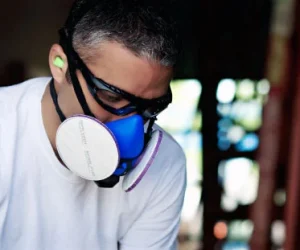
- Half-Mask Respirators:
- Cover the nose and mouth.
- Lighter and generally more comfortable for extended wear.
- Must be worn with separate eye protection (goggles) if eye irritation from smoke is a concern.
- Example: Dentec Safety Comfort-Air® Series 100 Half-Mask
- Full-Face Respirators:
- Cover the entire face, including the eyes, offering integrated eye and respiratory protection.
- Provide the highest level of protection as they form a seal around the entire face.
- Can be bulkier and warmer to wear.
- Example: Dentec Safety Comfort-Air® Series 130M Full-Facepiece
Recommended products
-

COMFORT-AIR® SERIES 300 THERMOPLASTIC COMPLETE WITH R95 FILTERS – MEDIUM/LARGE
$35.00 -
COMFORT-AIR® COMPLETE WITH N95 FILTERS – MEDIUM/LARGE
$29.00 -

COMFORT-AIR® SERIES 100 SILICONE COMPLETE WITH P100 CARTRIDGES – SMALL IN DISPLAY BAG
$57.90 -

COMFORT-AIR® SERIES 130M SPECIAL COMPOSITE SILICONE COMPLETE WITH P100 CARTRIDGES – UNIVERSAL FIT
$235.90


Essential Filter Cartridges for Wildfire Smoke:
For wildfire smoke, you need filters that capture particulate matter. Look for NIOSH-approved (National Institute for Occupational Safety and Health) cartridges:
- N95/N100: Filters at least 95%/99.97% of airborne particles. Not resistant to oil.
- R95: Filters at least 95% of airborne particles. Somewhat resistant to oil.
- P95/P100: Filters at least 95%/99.97% of airborne particles. Strongly resistant to oil (oil proof).
For wildfire smoke, P100 filters are highly recommended as they offer the maximum level of particulate filtration. Wildfire smoke does not typically contain significant oil aerosols that would degrade N-series filters rapidly, but P-series are robust and widely available.
Additional Protection for Close Proximity to Wildfires: Consider a Multi-Gas + OV Filter
If you live or work within 50 km of an active wildfire, especially one burning near roads, vehicles, buildings, or industrial sites, consider upgrading your protection with a P100 filter that includes multi-gas and organic vapor (OV) capabilities. While particulate matter (PM2.5) is the primary concern in most wildfire smoke, proximity to combustion of synthetic materials (like plastics, rubber, fuels, or treated wood) can release toxic gases and vapors including formaldehyde, benzene, and other volatile organic compounds (VOCs).
A multi-gas/P100 + OV filter offers the same high level of particulate protection (99.97%) while also adsorbing harmful gases and vapors—helping reduce irritation, nausea, or more serious health effects from chemical exposure in high-risk zones.
Recommended products
-

#15F158T27LP0 COMFORT-AIR® COMBINATION MULTI-VAPOUR GAS CARTRIDGE & P100, 4/BOX
$83.00 -

COMFORT-AIR® SERIES 100 SILICONE RUBBER HALF MASK – LARGE
$44.00 -

#15F158DN5 N95 Respirator Filter Pads 16/Box
$22.70 -

#15F158DR5 COMFORT-AIR® R95 FILTER PAD (16/BOX)
$22.70 -

#15F158TLP0 COMFORT-AIR® P100 LOW PROFILE CARTRIDGE (6/BOX)
$55.62


Use cases for enhanced protection include:
- Firefighters or emergency responders
- Individuals living near highways, gas stations, industrial parks, or urban wildland interfaces
- Communities downwind from infrastructure-dense burn areas
For short-term use during a fire’s active phase, this combination filter enhances both comfort and safety, especially when evacuation isn’t immediately possible.
Ensuring a Proper Fit: The Key to Effective Protection
A respirator is only as good as its seal. If air can leak around the edges, you’re not getting the full protection.
How to Perform a User Seal Check:
Always perform a seal check every time you put on your respirator:
- Positive Pressure Seal Check:
- Cover the exhalation valve with the palm of your hand.
- The facepiece should bulge slightly, and you should not feel air leaking around the seal. If you do, readjust the straps and mask position.
- Negative Pressure Seal Check:
- Cover the filter cartridges with the palms of your hands.
- Gently inhale so the facepiece collapses slightly.
- Hold your breath for about 10 seconds.
Factors Affecting Fit:
- Facial Hair: Beards or even stubble can prevent a proper seal. For optimal protection, users should be clean-shaven where the respirator seals against the skin.
- Eyeglasses: Half-mask respirators are generally compatible with glasses, but ensure the glasses don’t interfere with the mask’s seal on the bridge of the nose. Full-face respirators may require special eyeglass inserts.
- Sizing: Respirators come in different sizes. Choose one that fits your face shape and size correctly.

Disclaimer: Dentec Safety Specialists is not responsible for illness, injury, or other health outcomes resulting from improper use, fitting, or wear of this product. It is the responsibility of the user to assure safe and proper use of the respirator.
Using Your Reusable Respirator Correctly
- When to Wear: Monitor the Air Quality Health Index (AQHI) Canada. Consider wearing your respirator when the AQHI is in the moderate to high-risk categories due to wildfire smoke, especially if you are in a sensitive group (e.g., children, elderly, those with pre-existing respiratory or cardiovascular conditions).
- Putting On (Donning):
- Place the respirator over your nose and mouth.
- Pull the top strap over your head, positioning it high on the back of your head.
- Connect the bottom straps behind your neck.
- Adjust straps for a snug but comfortable fit.
- Perform a user seal check.
- Taking Off (Doffing):
- Move to an area with cleaner air, if possible.
- Unfasten the bottom straps, then the top strap.
- Pull the respirator away from your face.
- Wash your hands thoroughly.
Maintenance and Care for Longevity and Effectiveness
Proper maintenance ensures your respirator remains effective and hygienic.
- Cleaning:
- After each use, remove the filter cartridges.
- Wash the facepiece with warm water and mild detergent, or use respirator cleaning wipes.
- Rinse thoroughly with clean water.
- Allow to air dry completely in a clean area before storing or reattaching filters
- Replacing Filter Cartridges:
- Replace cartridges when they become dirty, damaged, or when breathing becomes difficult.
- Follow the manufacturer’s recommendations. There isn’t a set “hours of use” for wildfire smoke as conditions vary, but a noticeable increase in breathing resistance is a key indicator.
- If filters get wet, they should be replaced.
- Storage:
- Store your respirator and filters in a clean, dry place, away from direct sunlight, extreme temperatures, and contaminants. A sealed bag or container is ideal.
Dentec Safety Specialists: Your Partner in Respiratory Protection
At Dentec Safety Specialists, we are committed to providing high-quality safety solutions that protect individuals in challenging environments. Our range of reusable respirators, including the popular Comfort-Air® series, and NIOSH-approved particulate filters are designed for reliable performance and comfort. We understand the growing threat of wildfires and are dedicated to helping Canadians breathe safer. Our innovative designs focus on user comfort, secure fit, and effective filtration, addressing the critical needs during wildfire smoke events.
For more information on our respiratory protection solutions, visit Dentec Safety’s Respirator Products.
Stay Informed and Prepared
During wildfire season, stay updated on air quality conditions through resources like Health Canada’s wildfire smoke information and local public health advisories. Understanding when and how to use your respirator is as important as choosing the right one.
For further guidance on respiratory protection programs and standards, consult resources like the Canadian Centre for Occupational Health and Safety (CCOHS).
Key Takeaways for Wildfire Respiratory Safety
- Choose wisely: Select a NIOSH-approved reusable respirator (half-mask or full-face) with P100 particulate filters for optimal protection against wildfire smoke.
- Fit is crucial: Always perform a user seal check to ensure no air leaks around the mask. A proper seal is essential for protection.
- Maintain diligently: Clean your respirator regularly and replace filters when needed to maintain effectiveness and hygiene.
- Stay informed: Monitor air quality reports and know when to use your respirator.
Protecting your lungs from wildfire smoke is a critical step in safeguarding your health. By following these expert tips, you can significantly reduce your exposure to harmful airborne particles.
Explore Dentec Safety Specialists’ range of reusable respirators and filters today to find the right solution for your protection needs.
From respiratory and eye protection from smoke and other debris to first-aid and burn treatment, we have a full range of wildfire protection products to keep you prepared and protected during wildfire season. Check-out our complete offering of critical PPE for wildfires here: Wildfire Protection Equipment – Dentec Safety Specialists | Canada