If you work outside, you face a much higher risk of skin damage and skin cancer, and sunscreen is your first line of defense. According to Cancer Care Ontario, outdoor workers are 2.5 to 3.5 times more likely to be diagnosed with skin cancer compared to those who work indoors. Daily use of a high SPF, broad-spectrum sunscreen can significantly reduce your exposure to harmful UV rays, helping to prevent sunburn, premature aging, and long-term skin conditions. That’s a serious risk, one you can’t afford to ignore if you want to protect your health, maintain your skin’s safety, and keep showing up for work without compromise.
What Sunscreen Does
Sunscreen protects your skin from harmful ultraviolet (UV) rays. There are two main types of UV rays to worry about:
- UVA rays: Cause aging, wrinkles, and can lead to skin cancer.
- UVB rays: Cause sunburn and also increase skin cancer risk
A broad-spectrum sunscreen blocks both types. Regular use of sunscreen helps prevent:
- Skin cancer (including melanoma, the deadliest kind)
- Sunburns
- Premature aging (wrinkles, sagging, age spots)
- Hyperpigmentation and uneven skin tone
How Sunscreen Protects You
Sunscreen acts as a shield, blocking harmful UVA and UVB rays. The FDA explains that the Sun Protection Factor (SPF) tells you how much more solar energy (UV radiation) is needed to produce sunburn on protected skin compared to unprotected skin. Higher SPF means more protection, but it’s not about how long you can stay in the sun, it’s about how much UV energy your skin can handle before burning.
Research shows that using sunscreen daily can reduce the risk of squamous cell carcinoma by about 40% and cut melanoma risk in half (1). Regular sunscreen use also helps prevent premature skin aging, like wrinkles and age spots caused by sun exposure (1).
Why Workers Need Sunscreen
Most outdoor workers can’t avoid the sun. You can’t always find shade or work only early mornings and late afternoons. That means your skin is exposed to UV rays for hours every day. Over time, this adds up. The risk of skin cancer grows, and so does the chance of missing work due to illness. On average, a melanoma diagnosis leads to 28 missed workdays per person.
Employers have a responsibility to protect workers from hazards, including sun exposure. Promoting sun safety at work leads to fewer sick days, higher productivity, and lower healthcare costs (2).
What Makes a Good Sunscreen for Workers?
Not all sunscreens are the same. Outdoor workers need something that:
- Blocks both UVA and UVB rays (broad-spectrum)
- Is water and sweat resistant
- Won’t irritate skin (hypoallergenic, dermatologist tested)
- Is free from harsh additives (PABA-free, fragrance-free)
- Comes in packaging that’s easy to use on the job
“Outdoor workers are in a high-risk category for skin cancer. Less than 30% use sunscreen regularly. We need to do better.”
– Dr. Sunil Kalia, Vancouver Coastal Health Research Institute (2)
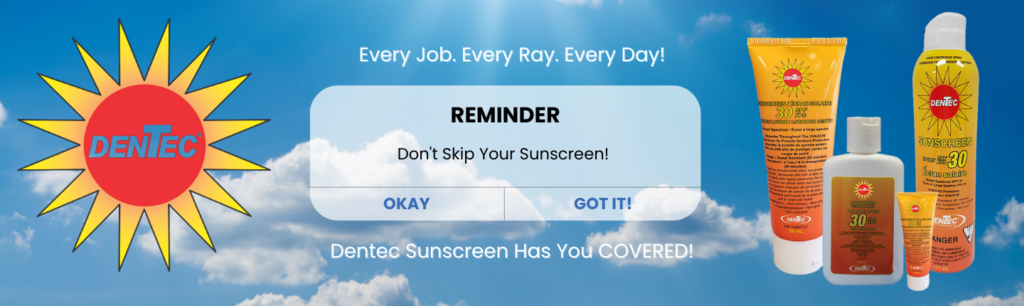
Dentec Sunscreen: Designed for the Job
Dentec Sunscreen was made for outdoor workers. Here’s what you get:
- Broad-spectrum UVA/UVB protection to shield against sun damage
- Water and sweat resistance so it stays on when you’re working hard
- Dermatologist tested and hypoallergenic, safe for all skin types
- PABA-free and fragrance-free, no harsh chemicals or scents
- Convenient packaging for easy use at worksites, construction zones, and industrial environments
Dentec Sunscreen helps prevent sunburn and long-term skin damage, so you can focus on your work and not worry about your skin.

How to Use Sunscreen on the Job
- Apply sunscreen to all exposed skin 30 minutes before going outside.
- Use enough, about a shot glass full for your whole body.
- Reapply every two hours, or more often if you’re sweating a lot (2).
- Don’t forget spots like ears, neck, and the back of your hands.
Key Facts (2024-2025)
- Skin cancer rates among outdoor workers remain high.
- Less than 30% of outdoor workers use sunscreen regularly.
- Daily use of SPF 15 or higher can lower melanoma risk by 50%.
- Employers are adding sun safety policies to protect their teams.
Recommended products


Related Research and Government Resources
- CDC: Sun Exposure at Work (NIOSH)
- CDC: Sun Safety Facts
- FDA: Sun Protection Factor (SPF)
- NIH: The Efficacy and Safety of Sunscreen Use for the Prevention of Skin Cancer
- NIH: Sun Safe Workplaces Study
FAQ
Yes. Even on cloudy days, UV rays can cause skin damage (3).
SPF 30 or higher is recommended for outdoor work (3).
Every two hours, or more often if sweating or working in water (3).
No. Combine sunscreen with protective clothing, hats, sunglasses, and shade for best protection.
It’s designed for workers: broad-spectrum, sweat-resistant, non-greasy, and easy to use on the job.
It significantly reduces risk, especially when combined with other sun safety measures (2). Dentec Sunscreen helps you work safely in the sun. Protect yourself and your team here. For more on sun safety for workers, check out the CDC, FDA, and NIH resources above.
Dentec Sunscreen gives you the protection you need to work safely under the sun. Prevention starts with protection, and applying sunscreen shouldn’t be a step you skip. With broad-spectrum coverage and reliable UV defense, Dentec helps outdoor workers reduce the risk of sunburn, skin damage, and long-term health issues, making it an essential part of your daily safety gear.