If you need a reusable half mask respirator, you want to know which material fits your job, your budget, and your comfort needs. Dentec Safety offers three main types: Silicone, Thermoplastic Elastomer (TPE), and Standard Elastomeric (generic rubber blend). Here’s a clear look at how they compare in comfort, durability, and their best applications.
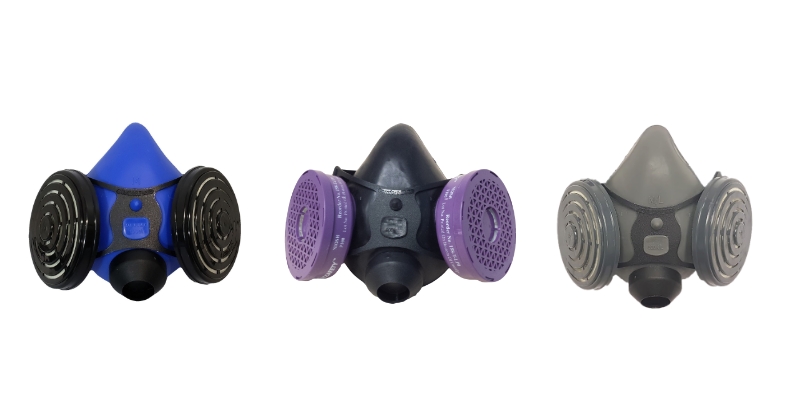
1. Silicone Half Mask Respirator (Comfort-Air 100 Series)
Silicone Half Mask Respirators
-

COMFORT-AIR® SERIES 100 SILICONE RUBBER HALF MASK – MEDIUM
$44.00 -

COMFORT-AIR® SERIES 100 SILICONE COMPLETE WITH R95 FILTERS – SMALL
$50.00 -

COMFORT-AIR® SERIES 100 SILICONE COMPLETE WITH OV/N95 FILTERS – LARGE
$60.40 -

COMFORT-AIR® SERIES 100 HALF MASK SILICONE RUBBER WITH DISKIT® P100OV FILTERS
$64.50 -

COMFORT-AIR® SERIES 100 SILICONE COMPLETE WITH P100 CARTRIDGES – SMALL IN CLAMSHELL
$64.00


Silicone masks are known for being extremely soft and flexible, which makes them highly comfortable for long-term wear. Their hypoallergenic properties make them ideal for sensitive skin, and they maintain comfort across a wide temperature range. Many users report that silicone masks provide a superior face seal without needing to overtighten straps, reducing pressure points and slippage. While silicone masks are praised for comfort, humidity buildup can cause discomfort for some users, especially during extended wear in humid environments. This variation depends on fit, climate, and individual sensitivities.
Durability:
Silicone lasts the longest. It resists aging, cleaning chemicals, and extreme temperatures. You can use it day after day without losing performance. While silicone is highly durable, proper maintenance and cleaning are necessary to ensure longevity. It can degrade if improperly stored or cleaned with incompatible chemicals. Also, no material is completely immune to wear over very long periods.
Who Should Choose Silicone:
If you need comfort, long-term durability, and don’t mind paying more for quality, silicone is your best bet.
Expert Insight:
“Silicone masks are the gold standard for comfort and seal integrity, especially in healthcare and critical environments.”
— Dr. Emily Tran, Occupational Health Specialist
2. Thermoplastic Elastomer (TPE) Half Mask Respirator (Comfort-Air 300 Series)
Thermoplastic Half Mask Respirators
-

COMFORT-AIR® SERIES 300 THERMOPLASTIC RUBBER HALF MASK – MEDIUM/LARGE
$28.00 -
COMFORT-AIR® SERIES 300 THERMOPLASTIC COMPLETE WITH N95 FILTERS – MEDIUM/LARGE
$35.00 -

COMFORT-AIR® SERIES 300 THERMOPLASTIC COMPLETE WITH P100 CARTRIDGES – SMALL/MEDIUM IN DISPLAY BAG
$46.70 -

COMFORT-AIR® SERIES 300 THERMOPLASTIC RUBBER COMPLETE WITH DISKIT® P100OV FILTERS
$50.40


Comfort:
TPE masks are lightweight and flexible, though generally a bit stiffer than silicone. They offer a good level of comfort, with a soft-touch feel that works well for medium to long durations. While not as soft as silicone, TPE still provides a comfortable fit and is suitable for most users, especially when balancing comfort and cost.
Durability:
TPE is tough, with good impact and chemical resistance. It stands up to UV and chemicals, but doesn’t last as long as silicone in extreme conditions. TPE offers good chemical and impact resistance but generally does not perform as well as silicone in extremely harsh environmental conditions over the long term. Yet, in specific use cases, advances in TPE formulations can provide comparable longevity.
Who Should Choose TPE:
If you want a balance of comfort, performance, and price, TPE works well.
Expert Insight:
“TPE masks provide a strong balance between protection and affordability, making them ideal for industrial settings.”
— Mark Jensen, Safety Equipment Consultant
3. Standard Elastomeric (Generic Rubber Blend) Half Mask Respirator (Comfort-Air 400 Series)
Elastomeric Half Mask Respirators
-

COMFORT-AIR® SERIES 400 ELASTOMERIC RUBBER HALF MASK – SMALL/MEDIUM
$21.90 -
COMFORT-AIR® COMPLETE WITH N95 FILTERS – MEDIUM/LARGE
$29.00 -

COMFORT-AIR® SERIES 400 ELASTOMERIC COMPLETE WITH DISKIT® P100OV FILTERS
Price range: $42.50 through $44.50 -
COMFORT-AIR®Nx SERIES 400 BLACK ELASTOMERIC RUBBER HALF MASK W/O EXHALATION VALVE – MEDIUM/LARGE
$31.50 -
Comfort-Air®Nx BLACK Elastomeric Rubber Half Mask W/O An Exhalation Valve – P100 Cartridges
$57.60



Comfort:
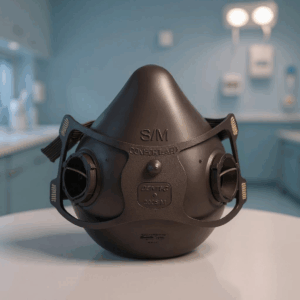
Standard elastomeric masks (generic rubber blends) are less flexible and not as soft as silicone or TPE. They can feel more rigid on the face and may not be as comfortable for long shifts. These masks are best for short-term or intermittent use where comfort is less of a priority.
Durability:
Standard elastomeric is rugged but wears out faster than silicone or TPE. The seal can degrade over time, especially with frequent use or cleaning. Some users find that the rigidity may reduce comfort even for short-term use, especially during prolonged wear. Additionally, this category often experiences more seal degradation over time, requiring more frequent replacement.
Best Uses:
- Industrial Maintenance: Tough and affordable
- General Manufacturing: Routine, short-term use
- Warehousing: Occasional use
- Contract/Seasonal Staff: Basic PPE at scale
- Do-it-Yourself Projects: Reliable protection for home improvement task
- Auto Body painters/ Finishers: Effective for paint & finish work
- Hobbyist Woodworkers: Good for dust and particle protection in workshops
Who Should Choose Elastomeric:
If you need to outfit a large team and want to keep costs low, these are a practical option.
Comparison Table
| Feature | Silicone | TPE | Elastomeric |
| Comfort | ★★★★★ | ★★★★☆ | ★★★★☆ |
| Durability | ★★★★★ | ★★★★☆ | ★★★★☆ |
| Cost | $$$$ | $$$ | $$ |
| Skin Sensitivity | Excellent | Good | Basic |
| Temp Resistance | Wide Range | Moderate | Moderate |
| Use Duration | Long-Term | Med-Long | Short-Med |
| Industry Fit | Medical, Utilities, Cleanroom | Construction, Ag, Petrochem | Industrial, General, Warehousing, Contract/Seasonal, DIY, Auto Body, Woodworking |
Key Takeaways
- Silicone: Top choice for comfort, durability, and sensitive skin.
- TPE: Good mix of comfort, toughness, and price.
- Standard Elastomeric: Best for short-term, budget-focused needs.
FAQ
1. Which mask is most comfortable for long shifts?
Silicone masks. They’re soft, flexible, and hypoallergenic.
2. Which mask lasts the longest?
Silicone. It resists wear and keeps its shape over time.
3. Are TPE masks good for chemical exposure?
Yes. TPE resists chemicals and UV, making it good for agriculture and industry.
4. Which is best for large teams on a budget?
Standard elastomeric. They’re affordable and durable enough for short-term use.
5. Is there a big difference in skin sensitivity?
Yes. Silicone is best for sensitive skin. TPE is good. Standard elastomeric is basic.