When it comes to workplace safety, protecting workers’ hands is critical. Hand injuries, such as cuts, punctures, and lacerations, account for a significant portion of workplace injuries—44% of all hand injuries result from these hazards. Selecting the right cut-resistant gloves is essential for mitigating risks and ensuring worker safety. But with a variety of standards and testing methods available, how do you determine the most suitable gloves for your workplace?
This guide will help you navigate the EN 388 and ANSI cut standards, understand their differences, and choose the appropriate work gloves for your needs.
What Are EN 388 and ANSI Cut Standards?
Both the EN 388 and ANSI standards evaluate the performance of cut-resistant gloves, providing a framework for testing and rating gloves based on their resistance to cuts, abrasions, tears, and punctures.
EN 388: A European Standard
The EN 388:2016+A1:2018 standard evaluates mechanical risks for protective gloves, including abrasion, blade cuts, tears, punctures, and, where applicable, impact resistance. Two types of cut-resistance tests are used:
- Coup Test: Measures resistance to cutting under a circular blade’s repeated motion. Results are rated on a scale from 1 to 5.
- TDM Test (ISO 13997): Measures the force required for a straight blade to cut through the glove material. Results are rated from A to F, with F indicating the highest resistance.
The EN 388 markings include scores for abrasion, Coup cut, tear, puncture, and TDM cut (e.g., 4X43F). An “X” indicates the test was not performed, and a “P” may indicate additional impact resistance[ME1] .

ANSI/ISEA 105: A North American Standard
The ANSI standard uses the TDM test method to rate cut resistance on a scale from A1 to A9, with higher numbers representing greater resistance. ANSI ratings are expressed in grams of force needed to penetrate the glove material.
Force is always measured in Newtons, and one Newton equals 0.225 pounds of force.
Understanding the Scores
Here’s how the EN 388 and ANSI ratings compare:

Note: Gloves tested to the EN cut standard with an F rating do not meet the ANSI cut rating levels 7 – 9. The glove must be tested to determine the ANSI cut rating.
Choosing the Right Gloves
When selecting cut-resistant gloves, consider the following:
- Hazard Assessment
Conduct a risk assessment to identify the specific hazards your workers face. Consider the sharpness of tools, materials handled, and exposure to oils or chemicals. - Matching Protection Levels
Use the EN 388 and ANSI ratings to select gloves that match the cut hazards in your workplace. For example, workers in metal stamping or glass handling may need Level F gloves (EN) or A6 or higher (ANSI). - Comfort and Fit
Gloves must provide adequate protection without hindering dexterity or comfort. Improperly fitted gloves can lead to reduced productivity and increased risk of injury. - Environmental Conditions
Choose gloves with appropriate coatings or materials for your work environment, such as nitrile for wet or oily conditions.
Future of Cut Standards
The upcoming ISO 23388 standard, expected in 2025, will introduce new test methods and performance levels, including additional ratings for the TDM cut test (e.g., Level G for forces ≥40 N) and a new hypodermic needle puncture test. These updates aim to enhance clarity and ensure greater safety across industries.
Why Dentec Safety?
At Dentec Safety, we understand that selecting the right gloves can feel overwhelming. That’s why we are proud to feature our new line of Guide Gloves, designed to meet the highest standards of safety, comfort, and durability. Our gloves are crafted with superior materials and innovative designs to provide the ultimate protection against cuts, abrasions, and punctures.
Explore our range of cut protection gloves, including options rated for both EN 388 and ANSI standards, to ensure your team has the perfect balance of safety and functionality.
Discover the Guide Gloves Collection Here
Need help finding the perfect gloves? Contact us today to explore our range of EN 388 and ANSI-rated gloves designed for comfort, durability, and protection. Together, we’ll ensure a safer workplace for your team.
Cut Protection Gloves
-

GUIDE 313 CUT PROTECTION GLOVE
$114.00 -

GUIDE 6602 CUT PROTECTION GLOVE
$153.00 -
GUIDE 6604 CUT PROTECTION GLOVE
$159.00 -

GUIDE 6605 CUT PROTECTION GLOVE
$186.00 -

GUIDE 6603 CUT PROTECTION GLOVE
$169.20 -

GUIDE 395 CUT PROTECTION GLOVE
$95.40 -

GUIDE 9508 CUT PROTECTION GLOVE
$275.40
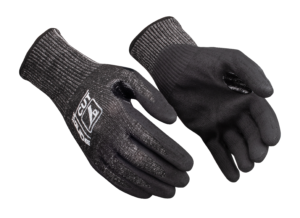
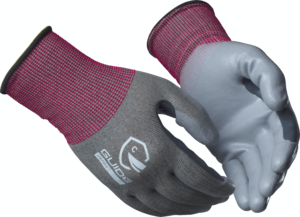
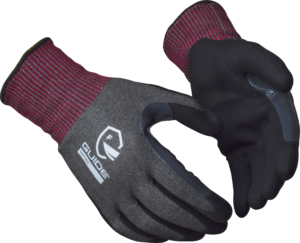
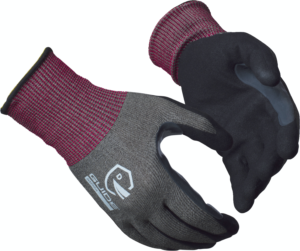

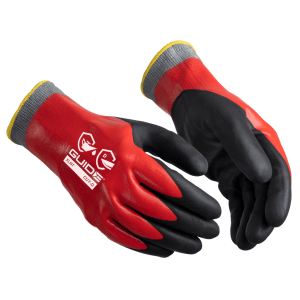
Experience Next-Level Cut Protection with GUIDE HXFIBR™ Gloves
GUIDE HXFIBR™ gloves are crafted with groundbreaking nanotechnology, providing unmatched cut resistance combined with a soft, flexible feel that enhances your comfort and precision on the job. This innovation, developed in our Guide Labs, leverages advanced nanomaterials to produce gloves that are not only incredibly strong but also exceptionally supple. Designed by industry experts, HXFIBR™ gloves offer superior protection without compromising fit or fingertip sensitivity.
Dentec Safety Specialists Inc, a leading manufacturer and distributor of safety products in North America, was awarded Gold for the Comfort-AirNx reusable elastomeric N95 respirator by the Occupational Health & Safety Industrial Hygiene Awards, and Vendor of the Year by INDICA Marketing Group. Contracted by the US Government, Dentec Safety received a multimillion-dollar PPE grant as part of the Coronavirus Aid, Relief, and Economic Security Act (CARES Act, a $2 trillion Coronavirus stimulus bill provided by the US Federal Government), and a contract for 125,000 respirators with 500,000 replacement filters for distribution to US healthcare. Dentec Safety has shipped to Cook Islands, Australia, Italy, England, New Zealand, Canada wide and the USA.