Choosing the right personal protective equipment (PPE) is essential for maintaining safety on the job. When it comes to protecting your eyes and face, face shields and safety glasses are two common options. But which offers better protection?
Thank you for reading this post, don't forget to subscribe!The answer depends on your work environment and the specific hazards present. This guide compares face shields and safety glasses, including key distinctions based on the ANSI Z87.1-2020 standard, to help you make the safest choice.
Understanding the Basics: Face Shields and Safety Glasses
Before diving into a comparison, let’s define what each type of PPE is:
- Face Shields: Transparent protective barriers that cover the entire face, typically made from polycarbonate or acetate. They protect against impacts, splashes, sprays, and debris.
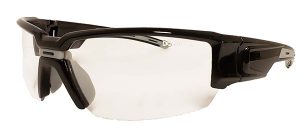
- Safety Glasses: Impact-resistant eyewear that provides a secure, snug fit around the eyes. They’re designed to protect against high-velocity impacts, dust, and flying particles.
Key Differences: Face Shield vs. Safety Glasses
| Feature | Face Shield | Safety Glasses |
| Coverage | Secondary eye protection and Full face protection | Primarily eye protection |
| Impact Resistance | Higher impact protection then safety spectacles and goggles plus; protects against splashes and debris. Minimum velocity testing based on size of steel ball: 6.35 mm (0.25 in.) diameter steel ball – 91.4 m/s (300 ft/s) or a 6.00 mm (0.24 in.) diameter steel ball 101.5 m/s (333 ft/s) | High; protects against high-velocity impacts; 6.35 mm (0.25 in.) diameter steel ball – 45.7 m/s (150 ft/s). or a 6.00 mm (0.24 in.) diameter steel ball 50.9 m/s (167 ft/s) |
| Field of Vision | Generally wider | Can be slightly restricted |
| Ventilation | Better ventilation; less fogging | Can fog up more easily if an anti-fog safety glass is not used |
| Use Cases | Where total face protection is required. Splashes, High-impact debris, infection control | Where only protection to the eye is required. High-impact environments, dust, UV radiation |
| Protection | Face protection and secondary eye protection in some cases | Can be worn alone for primary eye protection |
Protection Level: What Hazards Are You Facing?
The level of protection required depends on the specific hazards present in your workplace.
- High-Impact Hazards: For environments with a risk of high-velocity impacts from flying objects (e.g., construction, grinding, machining), safety glasses with appropriate impact ratings (like ANSI Z87.1) are essential. Where face protection is required, faceshields are tested to a higher impact rating.
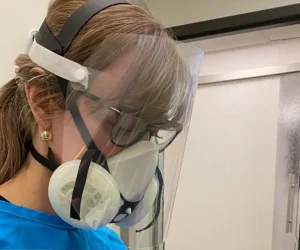
- Splash and Splatter Hazards: In situations where there’s a risk of splashes or splatters of chemicals, bodily fluids, or other hazardous substances (e.g., healthcare, laboratories, chemical handling), face shields provide broader coverage and prevent direct contact with the face.
- Dust and Debris: Both face shields and safety glasses can offer protection against dust and debris. However, safety glasses provide a tighter seal around the eyes, preventing particles from entering.
When to Use Face Shields
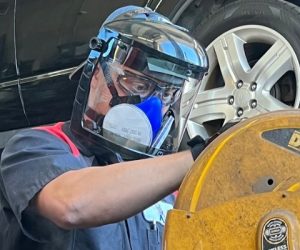
Face shields are ideal in situations where full-face protection is necessary. Always wear safety glasses underneath.
- Healthcare: Protecting against splashes of bodily fluids during medical procedures.
- CDC Guidelines for PPE in Healthcare
- Laboratories: Shielding against chemical splashes and accidental spills.
- Food Processing: Preventing contamination from splashes and debris.
- Grinding, Cutting, and Sanding: Protection from high-velocity particles.
Reminder: According to the ANSI standard, face shields alone do not provide adequate impact protection to the eyes. Face shield – A protective device commonly worn to shield the wearer’s face, or portions thereof in addition to the eyes, from certain hazards. Face shields are secondary protection for the eyes and shall be used only in conjunction with primary eye protection that includes a safety spectacle or goggle.
Recommended products


When to Use Safety Glasses
Safety glasses are the go-to choice for eye protection in environments for protection to the eyes for high-impact risks, dust and debris:
- Construction: Protecting against flying debris, nails, and other projectiles.
- Manufacturing: Shielding against metal shards, sparks, and other hazards from machinery.
- Welding: Special safety glasses with filtered lenses protect against intense light and radiation. Note, safety glasses must not be used for application that require infrared filters above shade #5.
- OSHA Fact Sheet on Eye and Face Protection
- Woodworking: Preventing sawdust and wood chips from entering the eyes.
Recommended products
-

SENTEC™ W/RUBBERIZED TEMPLE TIPS CSA CERTIFIED/ MEETS ANSI (SOLD IN BOX OF 12)
Price range: $24.84 through $35.40 -

HARTLEY™ FRAME AND LENS CSA CERTIFIED/ MEETS ANSI (SOLD IN BOX OF 12)
Price range: $97.08 through $169.08 -
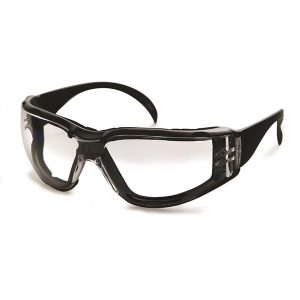
CEETEC™DX ANTI-FOG LENS WITH FOAM CARRIER CSA CERTIFIED/ MEETS ANSI(SOLD IN BOX OF 12)
Price range: $56.04 through $90.00 -
SANDVIPER™ BLACK FRAME W/FOAM SPATULA TEMPLE & STRAP ANTI-FOG LENS CSA CERTIFIED/ MEETS ANSI (SOLD IN BOX OF 12)
$163.20 -
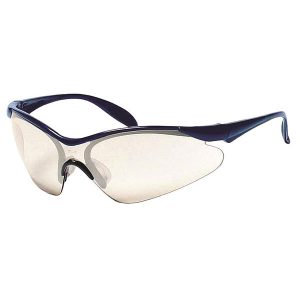
MIRANDA™ FRAME W/PADDLE TEMPLES AND LENS CSA CERTIFIED/ MEETS ANSI (SOLD IN BOX OF 12)
Price range: $64.36 through $77.40 -

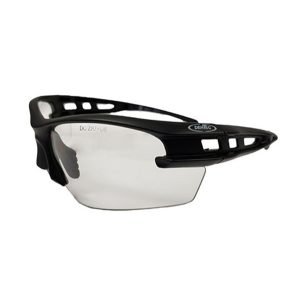
MANGO™ LENS AND FRAME WITH RUBBER TIPS CSA CERTIFIED/ MEETS ANSI(SOLD IN BOX OF 12)
Price range: $97.08 through $536.40


Comfort and Fit: Ensuring All-Day Wear
Comfort is a critical factor in ensuring that workers consistently wear their PPE.
- Face Shields: Can be more comfortable for extended wear due to better ventilation and less direct contact with the face. Adjustable headgear ensures a secure and comfortable fit.
- Safety Glasses: Proper fit is crucial to prevent slippage and ensure adequate protection. Features like adjustable temples and nose pads can enhance comfort.
Layered Protection: Combining Face Shields and Safety Glasses
In some high-risk environments, the best protection involves using both face shields and safety glasses together. This layered approach provides comprehensive coverage against a wide range of hazards. For example, workers in environments with both splash and high-impact risks might wear safety glasses under a face shield.
Dentec Safety Specialists: Your Partner in Workplace Safety
At Dentec Safety Specialists, we offer a wide range of ANSI-compliant safety glasses and face shields built for performance, comfort, and compliance. Whether you’re in healthcare, manufacturing, construction, or chemical handling, our PPE solutions are designed to meet your industry’s needs.
- CSA- and ANSI-certified eye and face protection
- Comfortable, reusable, and sustainable designs
- Available in bulk or custom-branded options
Explore:
- ANSI-Approved Eye Protection | Dentec Safety Specialists
- Face Protection – Dentec Safety Specialists | USA
- ISEA Eye-and-Face-Selection-Guide-tool.pdf
Choosing the Right PPE for Your Needs
The choice between face shields and safety glasses depends on a thorough assessment of the hazards present in your workplace.
Key Takeaways:
- Face shields are secondary protection for the eyes and must be worn with primary protection like safety glasses.
- Safety glasses are required for environments where only protection to the eye is necessary.
- Always choose PPE that meets or exceeds ANSI Z87.1 and CSA Z94.3 standards.
- Consider a layered approach in environments with multiple hazard types.
- Prioritize comfort and fit for consistent use and maximum safety.
Explore Dentec Safety Specialists’ wide range of PPE solutions to find the perfect fit for your safety needs. Contact us today for expert guidance and support in selecting the right equipment for your workplace.